
Exchange Teacher Handbook
Program Overview and Details
Welcome to the CETUSA J-1 Teacher program! We are excited that you have decided to explore this opportunity to learn about the U.S. school system and gain a better understanding of American culture.
We want your time in the United States to be as satisfying and beneficial as possible. This handbook contains information about the rules and regulations that apply to those who are a part of the J-1 Teacher Program. It will provide you with information on the J-1 visa consular application process, pre-departure procedures, housing, insurance, funding, safety, taxes, and other important aspects of your program.
Please read the entire handbook and use it as a reference guide during your program. After you have finished reading this handbook, please sign and date the “Acknowledgment and Receipt of Participant Handbook” at the bottom of this document and submit it along with other required application documents.
We look forward to having you on our program. We hope that your experience is both personally and professionally rewarding.
Contacts:
- Olivia Grigorjeva – Program Director – olivia.grigorjeva@cetusa.org
- Cara Parenti – Operations Manager – cara.parenti@cetusa.org
Mailing Address:
CETUSA (Council for Educational Travel, USA) 678 Front Ave NW Suite 091A
Grand Rapids, Michigan 49504 USA
Office Hours:
- Hours: Monday – Friday, 9 am – 6 pm (Eastern Standard Time)
- Phone: 1 (949) 940-1140
- Website: www.cetusa.org
The CETUSA emergency hotline number is available 24 hours a day, 7 days a week. In the event of an emergency, call this number and leave a message. A CETUSA representative will respond as soon as they are able. Please leave a detailed message and the phone number where you may be reached.
CETUSA Emergency Hotline: 1 (877) 261-6576
The Exchange Visitor Program is administered under the oversight of the Deputy Assistant Secretary for Private Sector Exchange, Bureau of Educational and Cultural Affairs (ECA). While CETUSA is your program sponsor and your primary point of contact during your program, the U.S. Department of State also considers your health, safety, and welfare its highest priority.
Address:
U.S. Department of State
Office of Private Sector Exchange Designation
Private Sector Programs Division ECA/EC/D/PS – SA-4E, Room E-B001 2201 C Street NW
Washington, DC 20520
- Email: jvisas@state.gov
- Phone: 1 (844) 300-1824
- Website: https://j1visa.state.gov/
The U.S. Department of State maintains a 24/7 toll-free emergency hotline for emergency and urgent situations. The U.S. Department’s Emergency Hotline number is 1 (866) 283-9090.
The J-1 Emergency Hotline number is to be used only in emergency situations. Non-emergency situations should be communicated to the Department by sending an email to jvisas@state.gov.
We would like you to become familiar with important terminology that will be used throughout the handbook:
- 22 CFR 62.24 Exchange Visitor Program Regulations (Program Regulations): The U.S. government regulations guiding our program Paragraph 22 CFR 62.24 – Subpart B pertains to the J-1 Teacher category.
- United States Department of State, or S. State Department, is an executive department of the U.S. federal government responsible for the nation’s foreign policy and international relations. The Exchange Visitor Program is overseen by the U.S. Department of State.
- Sponsor Organization: A legal entity designated by the Secretary of State to conduct an exchange visitor program. CETUSA is a designated sponsor for the J-1 Teacher program.
- Overseas Partner Agency: A legitimate entity within the context of their home country environment operating outside the U.S. Such entity must provide relevant home country documentation, such as a business registration or certification and undergo the vetting process prior to finalizing program partnership. Employees of overseas partner agencies introduce CETUSA programs to local markets, recruit applicants, conduct initial applicant screening and pre- departure orientations, aid in the visa application process, and assist with issues during the program when necessary.
- Exchange Visitor: A foreign national who has been selected by a sponsor to participate in an exchange visitor program, and who is seeking to enter or has entered the United States temporarily on a non-immigrant J-1 visa or who has obtained J-1 status in the United States based on a Form DS-2019 issued by the sponsor.
- J-1 Exchange Teacher: A J-1 exchange teacher is a participant in a cultural exchange program authorized by the U.S. Department of State. The J-1 visa allows foreign teachers to teach full-time at accredited primary or secondary schools in the United States. This program aims to promote international understanding and collaboration by allowing educators from other countries to share their knowledge, culture, and teaching methods while experiencing American education systems and culture firsthand.
- J-2 Dependent: a spouse or unmarried children (under the age of 21) of an exchange teacher who accompany or later join the exchange teacher in the United States. They apply for a J-2 visa.
- Program Applicant: a program candidate who is applying for a J-1 visa with CETUSA program sponsorship.
- Program Participant: a sponsored program applicant who has received their Form DS-2019 from CETUSA and is either applying for the J-1 visa or has arrived on the program.
- Accredited primary or accredited secondary school: Any publicly or privately operated primary or secondary institution for educating children in the United States that offers mainly academic programs and is duly accredited by the appropriate academic accrediting authority of the jurisdiction in which such institution is located.
- Full-time teaching: A minimum of 32 hours per week of teaching or teaching-related administrative activities.
- Home Country School: An exchange teacher’s school in his or her country of nationality or last legal country of residence.
- Host School: The U.S.-accredited primary or secondary school in which a sponsor places an exchange teacher pursuant to the exchange teacher’s written acceptance of the placement.
- International School: A school that is so designated by its school district, state, or other applicable governing authority, or one whose curriculum focuses predominantly on international aspects of the subject matter taught and/or language immersion, or one that predominantly follows a national curriculum of a foreign country.
- Language Immersion Program: A program that is a regular course of study offered by an accredited school having sustained and enriched instruction, in a language not native to the majority of the student population, that occurs for at least fifty percent of the school day.
- Virtual Exchange: A technology-enabled, sustained, people-to-people cross-cultural educational program that may supplement the goals of an in-person exchange and integrates global knowledge, cultural awareness, and/or foreign language into the classroom or other setting.
- Form DS-2019: a controlled document of the Department of State that a sponsor issues to a potential Exchange Visitor Program participant and his or her accompanying spouse and dependents as permitted by This form, together with other necessary Department of State documents, permits the named foreign national, if required, to schedule an interview at a U.S. embassy or consulate to seek to obtain a J-1 visa to enter the United States as an Exchange Visitor Program participant or as an accompanying spouse and dependent.
- Form DS-160: the Online Nonimmigrant Visa Application form is for temporary travel to the United States. This form is submitted electronically to the Department of State website via the Internet prior to scheduling the visa interview appointment.
- SEVIS (Student and Exchange Visitor Information System): An online system that the U.S. Department of Homeland Security (DHS) uses to maintain information on the Student and Exchange Visitor Program. Your Form DS-2019 is generated through the SEVIS system, and we are required to keep SEVIS records up to date if there are changes to your address, financial information, or program.
- SEVIS ID: a unique identifier assigned to you by the government when sponsorship is approved, and your SEVIS record is A SEVIS ID number starts with the letter N followed by 10 digits. On Form DS-2019, the number is on the top right-hand side of the page.
- I-901 (SEVIS fee receipt): a fee mandated by U.S. Congress to support the program office and automated system (explained in the above term) that keeps track of students and exchange visitors and ensures that they maintain their status while in the United States. All exchange teachers must pay the I-901 SEVIS fee after sponsorship is granted. The payment is associated with the participant’s SEVIS ID issued for the program. Click here to learn more about the SEVIS fee.
- United States Citizenship and Immigration Services (USCIS): a federal government agency which exclusively focuses on immigration and citizenship services.
- DHS (Department of Homeland Security): a federal government agency charged with protecting the borders of the United States and its territories. USCIS is a component of DHS.
- United States Customs and Border Protection (CBP): a federal law enforcement agency of DHS and is the country’s primary border control organization. It is charged with regulating and facilitating international trade, collecting import duties, and enforcing S. regulations, including trade, customs, and immigration.
- Port of entry: the location where an exchange teacher enters the U.S.
- S. Customs Declaration Form 6059B: this form is used as a standard report of the identity and residence of each person arriving in the U.S. This form is also used to declare imported articles to U.S. Customs and Border Protection (CBP) Written declarations are required from travelers arriving by air or sea and verbal declarations are required from travelers arriving by land. Access the form here.
- Form I-515A: if you enter the U.S. without your required documents or with unsigned or missing information, the CBP officer may issue you a Form I-515A, which allows you temporary entry to the S. for 30 days. Issuance of I-515A is at the discretion of the CBP officer. Within 30 days, you must submit your I-515A and supporting documents to the U.S. government, otherwise your SEVIS record will be terminated.
- Grace Period: USCIS allows exchange teachers a 30-day travel period commonly referred to as the “grace ” During the 30-day grace period (before and after the exchange teacher’s program dates), exchange teachers are not in J-1 visa status and are under the jurisdiction of USCIS. They are not authorized to start or continue working within their host school during the grace periods. Exchange teachers are encouraged to travel within the U.S, but it is not recommended they travel beyond the U.S. borders during their grace periods as they may not be permitted reentry.
- Form I-94: an official arrival and departure record which documents your legal entry into the S., your specific immigration status, and how long you can stay in the U.S. Your record can be accessed here through the government website.
- Social Security Number (SSN): a nine-digit number issued to U.S. citizens, permanent residents, and temporary (working) residents by the Social Security Administration. It is a national identification number for taxation and other purposes.
- IRS: Internal Revenue Service. The agency that enforces tax laws and collects taxes for the U.S.
- Federal Income Tax: taxes paid to the S. government by all income earners, including exchange teachers.
- State Income Tax: taxes on income earned in a state. State income tax generally funds state budgets rather than the federal government. Exchange teachers may be subject to pay state income taxes.
- Local Income Tax: taxes enacted by cities, counties, local government, and school districts. Exchange teachers may be subject to pay local income taxes.
- Social Security Tax: a tax that is levied on both employers and employees to fund the Social Security program in the U.S. Non-immigrant visa holders who are classified by the IRS as “nonresident aliens” are not subject to this tax deduction.
- Medicare Tax: a federal employment tax that funds a portion of the Medicare insurance Non-immigrant visa holders who are classified by the IRS as “nonresident aliens” are not subject to this tax deduction.
- Federal Unemployment Tax Act (FUTA): a U.S. federal law that imposes a federal employer tax used to help fund state workforce Non-immigrant visa holders who are classified by the IRS as “nonresident aliens” are not subject to this tax deduction.
As stated in the Mutual Education and Cultural Exchanges Act of 1961, the Exchange Visitor Program was to allow foreign nationals to temporarily reside in the United States and participate in a variety of training programs, as well as to promote cultural exchange between the United States and other countries. The program is grounded in U.S. public diplomacy.
The Exchange Visitor Program is overseen by the U.S. Department of State. There are 15 program categories that focus on cultural exchange by giving participants the chance to engage more deeply with Americans and share their cultures with their U.S. host companies and communities. The participants also have opportunities to improve their English language abilities during their program. To participate in the Exchange Visitor Program, exchange visitors must be sponsored by one of the State Department’s U.S.- based designated sponsor organizations authorized to administer the program, such as Council for Educational Travel, USA (CETUSA).
Council for Educational Travel, USA (CETUSA) is a non-profit student and cultural exchange organization dedicated to its mission of reaching out to encourage a lifelong journey of global peace and understanding. CETUSA is a State Department designated sponsor for J-1 High School, Trainee, Internship, and Teacher programs. Since 1995, we have helped tens of thousands of students, families, young professionals, and businesses benefit from the integration of different cultures. CETUSA partners with like-minded cultural exchange agencies and academic institutions in more than fifty countries. CETUSA- sponsored career development programs play an important role in global business. CETUSA is a member of CSIET and of the CET Management Group which provides marketing and finance functions for the organization.
As stated in 22 CFR 62.24, the primary purpose of the J-1 Teacher Program is to promote the interchange of U.S. and foreign teachers and enhance mutual understanding between the people of the United States and other countries. Exchange teachers sharpen their professional skills and participate in cross-cultural activities in schools and communities, and they return home after the exchange to share their experiences and increased knowledge of the United States and the U.S. educational system. Such exchanges enable foreign teachers to understand better U.S. culture, society and teaching practices at the primary and secondary levels, and enhance U.S. students’ knowledge of foreign cultures, customs and teaching approaches.
As the designated sponsor, CETUSA is responsible for monitoring all aspects of your program, including orientation, placement, and periodic check-ins to maintain compliance. CETUSA also supports you throughout your stay and ensures your health, safety, and welfare. The information below explains CETUSA’s role in program administration:
- Provide program applicants with appropriate program information, program regulations, pre-arrival, and area-specific information.
- Screen applicants to ensure they meet program eligibility as defined in program regulations 22 CFR 62.24.
- Obtain references from a colleague and a current or former supervisor to verify reputation, character, and teaching skills of each applicant.
- Confirm English language proficiency of selected applicants to ensure they can function effectively in U.S. classrooms and daily life.
- Ensure participants have the necessary documentation from their home schools for cross-cultural activities.
- Issue Forms DS-2019 only after applicants have accepted written offers of full-time teaching positions.
- Ensure program dates align with the U.S. academic year to facilitate smooth transitions for participants.
- Notify participants to maintain compliance with any applicable collective bargaining agreements.
- Secure sickness and accident insurance for program participants, at minimum for the duration of the program on their Form DS-2019.
- Ensure teaching positions and compensation are comparable to those of U.S. teachers in the same district or host school.
- Provide comprehensive program disclosure, including fee summaries, cost estimates, and contractual terms to applicants before signing any agreements.
- Provide guidance to applicants on how to secure appropriate housing, as needed.
- Ensure all participants receive pre-departure orientation and area specific information.
- Monitor program by means of monthly check-in emails.
- Ensure each participant completes at least one cross-cultural activity annually in two designated categories: one showcasing their home country’s culture and another involving U.S. student interaction with schools abroad.
- Confirm that participants participate in accredited primary or secondary schools specified on their DS-2019 forms or at locations directly involved in official school activities.
- Monitor and manage the duration of participation, ensuring it does not exceed three years without authorized extensions from the U.S. Department of State.
- Facilitate requests for extensions, including preparation of required documentation such as performance reviews and detailed engagement in cross-cultural activities over the previous three years.
- Provide program support services including a toll-free 24-hour emergency telephone support line.
- Facilitate communication and coordination between participants, host schools, and relevant authorities throughout the exchange program.
CETUSA can sponsor teaching programs if a school meets program requirements and agrees to teach according to program regulations and foster cultural exchange at their host school. CETUSA partners with a variety of schools across the U.S. who agree to host CETUSA-sponsored international teachers.
Not every school is eligible to act as a host for the program. CETUSA applies stringent criteria when screening potential host schools to ensure compliance with program regulations. Schools with negative publicity, poor employee reviews, history of lawsuits, or other issues that could bring the Exchange Visitor Program or the U.S. Department of State into notoriety or disrepute will not be approved for CETUSA sponsorship.
To engage in the program, host schools must:
- Abide by U.S. Department of State program regulations and CETUSA guidelines.
- Offer full-time teaching positions (minimum 32 hours per week) in accredited primary or secondary schools.
- Ensure participant appointments are temporary and do not lead to tenure.
- Align program dates with the U.S. academic year cycle.
- Ensure teaching positions are comparable in duties, responsibilities, hours, and compensation to those of similarly situated U.S. teachers.
- Comply with any applicable collective bargaining agreements.
- Verify participants meet U.S. state teaching eligibility standards, including criminal background checks.
- Promptly notify CETUSA of any significant changes or emergencies involving the participant.
- Ensure participants maintain employment with the host school and, where applicable, the host school district during their program.
CETUSA expects that all sponsored participants behave and present themselves in a professional and mature manner. Doing the following will help you have a beneficial experience both before and during your program:
- Meet the qualifications for teaching at the primary or secondary level in your home country.
- Hold a degree equivalent to a U.S. bachelor’s degree in education or the academic subject field to be taught.
- Satisfy U.S. state teaching eligibility standards, including any required background checks.
- Possess at least two years of full-time teaching experience or an advanced degree in education or a related field within the last eight years.
- Maintain a good reputation and character, adhering to professional standards and ethical behavior.
- Act as a full-time teacher of record in an accredited primary or secondary school, temporarily teaching subjects you are qualified for, and, at the pre-kindergarten level, teach only in language immersion programs.
- Participate in and facilitate cross-cultural activities designed to give an overview of your home country’s culture, traditions, heritage, and educational system.
- Complete at least one cross-cultural activity for your school or community and one activity involving dialogue with a foreign school each academic year.
- Maintain Lawful Non-Immigrant Status in the U.S. throughout your program.
- Abide by all U.S. Department of State regulations and CETUSA guidelines throughout the exchange program.
- Communicate effectively with CETUSA, your local agency (if applicable), and your host school.
- Follow your host school rules and policies (e.g., calling-in sick, requesting vacation time off).
- Don’t be afraid to voice concern; if you have any issues, please contact CETUSA staff and/or your agency representative (if applicable).
- Remember that your safety comes first; immediately report any safety concerns to CETUSA staff.
- Ensure timely completion and submission of required check ins and reports, including details of cross-cultural activities. Submit annual reports detailing cross-cultural activities, including dates, locations, participants, and the estimated impact of each activity.
- Ensure all actions and behaviors comply with U.S. laws, school policies, and ethical standards.
- Don’t use the exchange program as a means for ordinary employment, displacing American workers, or changing visa status to remain in the U.S. upon completion of your program.
- Understand and manage financial obligations, including fees, insurance costs, housing, transportation, and other related expenses as outlined by the host school and CETUSA.
- Actively participate in the school community, contributing to school activities, events, and fostering positive relationships with students, staff, and the broader community.
Program Requirements
The J-1 Teacher Program category is privately funded and does not receive any financial assistance from the government. The funding to support visitors on a J-1 visa primarily comes from fees and payments made by the program applicants to CETUSA for the programs they are sponsored for.
The fees help cover operational costs for the sponsor organization’s program services only. Program fees do not include any allowance for your international or domestic travel or living expenses incurred while in the U.S. If you are applying with CETUSA’s local partner agency in your country, please contact your agent to learn about program fees and payment terms to obtain sponsorship as you may incur additional service fees during your program.
CETUSA must ensure that program applicants have sufficient funds to meet their living expenses for the duration of the program. The minimum funding requirements for CETUSA participants are:
- $2,000 arrival/emergency funds, available at the time of arrival to cover start-up living These costs include but are not limited to temporary lodging, first month’s rent, rental security deposit, mobile phone, transportation, food, and supplies.
- It usually takes 1-2 weeks after your program’s start date before you receive your first paycheck, but sometimes it can take longer if a background check and/or a drug test are required.
- $2,000 per month on the program.
- An additional $1000 per month for each J-2 Dependent (if applicable).
The required funding may be assessed at a higher rate for programs located in cities with a higher cost of living.
Each program applicant may apply for additional funding sources such as scholarships, grants, or funding from an outside organization or their home country government, all of which must be disclosed to CETUSA at the time of applying.
If housing is not provided by your host school, it is your responsibility to find and secure your own housing in the U.S.
You should expect to pay on average between $800–$1,200 for shared living accommodation and possibly the same amount as a security deposit. In some areas, the cost of living will be higher than $2,000 per month. The first month’s rent and the security deposit are typically due prior to move-in. Please ask CETUSA staff to provide a rent estimate for the area prior to your arrival. Please view the Exchange Teacher Handbook – Appendix for detailed information on various housing options and rental terms, as well as guidance on how to contact prospective landlords.
We recommend that you reach out to your host school contact before your arrival to inquire about available housing options or leads in the area. They are knowledgeable about the local housing market and may provide valuable resources to help you find accommodation close to your school.
CETUSA is required to ensure that all participants (as well as their accompanying spouses and dependents) have adequate insurance coverage for the complete duration of their programs. The policy, at minimum, must include the following benefits:
- Medical benefits of at least $100,000 per accident or illness.
- Repatriation of remains in the amount of $25,000.
- Expenses associated with the medical evacuation of the exchange visitor to his or her home country in the amount of $50,000.
- A deductible not to exceed $500 per accident or illness.
! The insurance coverage is mandatory for your program dates as reflected on your Form DS-2019 only. CETUSA recommends you buy additional insurance coverage for your grace period month(s) if you plan to arrive before your program begin date or remain in the U.S. after your program end date. If you do not purchase additional insurance and require medical attention during your grace period stay, you will be responsible for paying all medical expenses yourself. Please note that medical costs are extremely expensive in the U.S.
Accident and Sickness insurance is included in your program package. CETUSA is not your insurance provider but will enroll you in an insurance policy before your program start date. It is important that you understand the details of your health insurance coverage before you travel abroad. You are required to review the plan to ensure that you understand its inclusions, and most importantly, its exclusions.
The policy provided does not cover pre-existing conditions. If you have a pre-existing condition, we recommend that you research purchasing additional insurance coverage.
Having insurance coverage does not mean that your healthcare services will always be at zero cost. Depending on the medical treatment that you receive, there may be out-of-pocket costs that you will incur. If you need to seek medical attention, you must show proof of coverage under your health insurance policy. Therefore, it is important that you bring your insurance ID card with you.
Except in the event of a potentially life-threatening medical emergency, you must contact One Team Health before seeking medical treatment. They will help you confirm the details of your coverage and find a participating (in-network) provider. If you go to a medical provider that is out-of-network, you will not receive full insurance benefits, and you will potentially incur higher out of pocket expenses.
For additional details about your health insurance coverage and how to contact One Team Health, please view the Exchange Teacher Handbook – Appendix.
Section 212(e) of the U.S. Immigration and Nationality Act, also known as Two-Year Home-Country Physical Presence Requirement referenced in the immigration regulations, means that those J-1 or J-2 visa holders are subject to this requirement cannot become permanent residents in the U.S., change status in the U.S., or be eligible for employment-based or family-based visa sponsorship in H, L or K visa status until they return to their country of last permanent residence for at least two years cumulatively or receive a waiver of this requirement.
The U.S. Consular officer and/or the DHS officer at the port of entry decide as to whether this requirement applies, and the notation(s) can be found on your Form DS-2019 in the bottom left corner and/or on the visa page of your passport. CETUSA does not have any influence on this determination. To see how and if the 212(e) rule may apply to you, please review the Exchange Teacher Handbook – Appendix.
CETUSA must ensure that all program applicants have sufficient English language skills to effectively teach in the U.S. classroom. CETUSA makes this determination by means of a documented interview conducted by video conferencing.
Your CETUSA Program Administrator will have a meeting with you at the end of the application process to discuss your program details and verify your English language skills.
Application Process and Visa Information
CETUSA offers two application types, Self-Placements and CETUSA Placements, which are distinguished by the program applicant’s offer status. CETUSA’s ability to provide a sponsorship decision requires evaluation of relevant documents of both the applicant and their host school. Program applicants with confirmed programs must submit their host school documents along with their applications to CETUSA.
The self-placement program is for program applicants who have a confirmed teaching position in the U.S. and are seeking a program sponsor. CETUSA Program Administrators will begin the application review process only after all documents are submitted. During the review process, CETUSA will verify your program eligibility and conduct research on the host school.
The CETUSA placement program is for program applicants who do not have a confirmed teaching position in the U.S. and are seeking placement assistance from CETUSA. These are pre-screened positions from host schools that have expressed interest in hosting exchange teachers. All currently available positions can be viewed on the CETUSA website.
Each program offer has a number assigned for identification. You can apply for multiple positions within your field to increase your chances of a follow up interview and a placement offer.
CETUSA can only recommend screened applicants for its positions. Your program eligibility documents must be submitted to and reviewed by CETUSA staff first. After the initial screening is completed, your resume will be shared with schools of your choice.
If you are not selected for the interview or if the interview does not go well, you can continue monitoring our website for other program options. We also encourage you to continue an independent position search, which may produce faster placement results.
Only those applicants who have a confirmed offer letter from a host school can apply for sponsorship approval. CETUSA uses a proprietary system to manage application documents. If you are applying with a CETUSA partner agency, they will assist you with the application submission.
Below are the required application documents for exchange teacher program applicants:
Copy of Passport
- Only the biographic page should be submitted.
- Your passport must be valid for the duration of your program.
- It may need to be valid for an additional six months if the country does not appear on the Six-Month Club list.
Teaching Certification
- Evidence of qualification to teach at primary or secondary levels in your home country.
Degree/University Letter
- Proof of a degree in either education or the academic subject field in which the exchange teacher intends to teach.
- Foreign credential evaluation that confirms the degree earned is equivalent to a 4-year U.S. bachelor’s degree.
Proof of Teaching Experience
- A letter to verify that the applicant has at least 2 years of teaching experience (in the last 8 years). If you have more than 2 years of experience, we only need proof of 2 years. The letter must be on official letterhead from the school or school district, and it must state that the experience was full-time or show that full time hours were completed; it must be signed by a school official, such as a school administrator or head of school.
Your Home School Cultural Activity Letter
- A letter from the head of the school in your home country, confirming their willingness to collaborate with you on the cross-cultural activity component. The foreign school must be at the same academic level as the proposed host school, but it does not have to be the school where you currently teach or have taught in the past. The letter must be printed on school stationery and include the email and telephone number of the official signing it.
Reference Letters
- Two reference letters written in the last 12 months. The letters must meet the following criteria:
- One letter from a colleague.
- One letter from a current or former supervisor, affirming your good reputation, character, and teaching skills.
Curriculum Vitae (CV)
- Must be up-to-date and current.
- Must have a professional appearance.
- Must include full contact information.
- Must match education and employment dates in supporting documents.
Exchange Teacher Handbook Acknowledgement and Receipt
- You must sign and date the last page of the Exchange Teacher Handbook (Acknowledgement of Receipt page). This is an acknowledgement that you have fully read and understand the information that you’ve read in the handbook.
Background Check Report
- A criminal background check from your home country is required. The document must indicate that the applicant has no criminal record. The criminal background report must be issued by a government entity. The background check report must be from a national (not local) source and must show no criminal record in the country where you reside.
Application & Agreement
- A PDF document that you will complete during the application process.
Sponsorship is not granted until all eligibility screening, host school document review, applicant document review and interview processes are complete and meet all CETUSA and U.S. Department of State program rules.
While most programs are approved for sponsorship, CETUSA has the right to approve or deny any application if we believe the application is not in line with the J-1 program regulations. After sponsorship is granted, CETUSA program staff will send you a program acceptance email confirming your sponsorship approval. This email contains sickness and accident insurance information and your signed Form DS-2019.
CETUSA sends all sponsorship documents directly to approved participants through email. The following documents will be included in the acceptance email and packet. You must print these documents and bring them to your visa interview appointment:
- Form DS-2019 (digitally signed by designated CETUSA staff).
- Welcome Letter from CETUSA.
- Welcome Letter from the U.S. Department of State.
- Letter confirming your accident and sickness insurance coverage.
- Letter to present to the Social Security Office.
Upon receipt of the acceptance package, you must review your Form DS-2019 and other documents to ensure all information is correct and accurate.
After receiving your acceptance packet from CETUSA, you will need to schedule and attend your J-1 (nonimmigrant) visa interview appointment at your U.S. Embassy or Consulate. A valid J- 1 visa is required to seek admission to the U.S. and to begin your program. It is not possible to apply for a U.S. visa on U.S. territory. All J-1 visa applicants (except Canadian citizens) are required to appear in person at a U.S. Embassy or Consulate for a brief interview. If you are a Canadian citizen, please refer to “Instructions for Canadian Citizens” below.
You should attempt to schedule your visa appointment well in advance of your proposed date of travel if the circumstances permit. Please contact CETUSA staff if you have any problems applying for your visa. Below are the steps required to complete the process:
Step 1: Review, print and sign your Form DS-2019.
The Form DS-2019 is not a visa application form or a J-1 Visa. Instead, it certifies your eligibility and allows you to apply for a J-1 Visa.
- Read both sides and thoroughly, check the information (e.g., your name spelling, dates) and make sure there is a digital signature of a CETUSA representative on the first page.
- Read the instructions on the form, including the terms and conditions on page 2. Once you have read through the form, print it, and sign your name at the bottom of page 1. Your signature is an explicit acceptance of the terms of the program.
- Keep your Form DS-2019 in good condition throughout the entire visa process, during your stay in the U.S., and after your program is completed.
Step 2: Locate a U.S. Embassy/Consulate near you.
- You can find a S. Embassy or Consulate location in any country here.
- The instructions on how to pay your visa appointment fee and secure your interview date may differ slightly depending on the place where you apply, so please review the instructions available on the website of the U.S. Embassy/Consulate where you will apply to learn more about the fee payment options.
- It is recommended to apply for the J-1 nonimmigrant visa in your country of citizenship or permanent residence in support of your home country ties. However, it is possible to apply at a U.S. Embassy/Consulate in another country but be aware that it may be more difficult to qualify for a visa outside of the country where you live. If you choose to do so, you must first contact the preferred location to verify their visa appointment availability for third country nationals as it applies to you.
Step 3: Complete Form DS-160 Online Nonimmigrant Visa (NIV) Application.
- You can find instructions and access online applications here.
- You will upload your photo while completing the online Form DS-160. Your photo must be in the format explained in the Photograph Requirements. You can view the photo requirements here.
- You must submit completed Form DS-160 online.
- After submitting Form DS-160, you will receive a confirmation page with a barcode. You must print this confirmation page and bring it to your visa interview appointment. The U.S. Department of State stores all information that you submit in its database. A U.S. Consular official will access and review the form during the interview.
- Canadian citizens do not need to complete this form (see “Instructions for Canadian Citizens”)
Step 4: Pay $220 (or equivalent in local currency) Nonimmigrant Visa Application Processing Fee.
- The fee is non-refundable, non-transferable, and valid for one year only in the country where it was paid.
- Payment instructions will be provided on the selected U.S. Embassy/Consulate website.
- In most cases, all visa applicants, including children, are required to pay the visa appointment fee.
- The fee payment receipt number may be required prior to gaining access to your non-immigrant visa appointment schedule.
- The fee does not apply to Canadian citizens (see “Instructions for Canadian Citizens”)
Step 5: Schedule your (NIV) nonimmigrant J visa appointment and print appointment confirmation page.
- Visit here and follow instructions.
- Have your DS-160 Online Nonimmigrant Visa Application form confirmation number accessible. It appears in bold print on your DS-160 confirmation page.
- Have your visa application processing fee receipt accessible.
- Once the appointment date is secured, print the appointment confirmation page, which you must bring with you to your interview.
- The visa appointment wait times will vary depending on the location. It is important to schedule your appointment early to ensure that you have enough time to obtain your J-1 visa before your scheduled program start date.
- You may be able to request an urgent appointment if the first available interview date is less than 60 days prior to your program start date, but it may or may not be granted. Consider adjusting your program begin date prior to finalizing your sponsorship application to allow enough time for you to apply for your visa.
- A J-1 visa cannot be issued more than 120 days in advance of the program start date. However, an application for a J-1 visa can be submitted more than 120 days in advance of the start date noted on your Form DS-2019 to accommodate long processing times.
You must notify CETUSA staff or your local partner agency of your visa interview appointment date as soon as it is scheduled.
When applying for a J-1 visa, you must bring the documents mentioned below to the U.S. Embassy/Consulate. If you are coming with a dependent, please follow the directions in the Exchange Teacher Handbook – Appendix to apply for a J-2 visa.
- Passport: valid for travel to the United It may need to be valid for an additional six months if the country does not appear on the Six-Month Club list.
- Form DS-2019: must be signed.
- Signed Offer Letter from Host School
- Visa appointment Confirmation page: showing the date and time of your appointment.
- Visa application fee payment receipt: if you were required to pay before your interview.
- I-901 SEVIS fee receipt
- Photo: you will upload your photo while completing the online Form DS-160. Bring a copy of the same photo just in case.
- Bank statement: showing that you have at least the minimum amount of personal funds listed on your Form DS-2019.
- Accident and Sickness Insurance Confirmation Letter: copy sent in acceptance package.
- Evidence of home country ties: supporting evidence of strong financial, social, and family ties to your home country that will compel you to return to your country after your program in the S. is completed. The following documents can help to demonstrate your home ties:
- Evidence that you own a house or apartment.
- Evidence that you are not giving up the lease on a house or apartment.
- Evidence that you have a job or school waiting on your return.
- Evidence of dependents who will not be leaving their home country.
- Evidence of a spouse who will not be leaving the home country.
- Evidence of financial ties: bonds, bank accounts, property ownership, business investments.
- Evidence of leadership in community organizations.
- Evidence of other commitments that would compel you to return to your home country.
You must print all the documents sent in the CETUSA acceptance packet. You will need the printed documents when applying for your visa.
Canadian citizens seeking U.S. admission on J-1 or J-2 visa status are not required to apply for visa, complete Form DS-160, pay visa appointment fee, or obtain a visa sticker at a U.S. Embassy/Consulate to enter the United States. When crossing the border to begin your program in the U.S., you will need to provide the CBP Officer at the port of entry the following documents:
- A Canadian passport: valid for travel to the United States.
- Form DS-2019: must be signed.
- Signed Offer Letter from Host School
- I-901 SEVIS fee receipt
- Bank statement: showing that you have at least the minimum amount of personal funds listed on your Form DS-2019.
- Evidence of ties to Canada: supporting evidence of strong financial, social, and family ties to your home country that will compel you to return to your country after your program in the S. is completed.
Presenting these documents will allow you to enter the U.S. up to 30 days prior to your program start date indicated on Form DS-2019 if your U.S. admission is granted. If you are Canadian, contact your local U.S. Embassy/Consulate to further verify their policies as they may change.
You must read the Legal Rights and Protections pamphlet to learn about your rights in the United States and protection available to you. Review this important pamphlet before applying for your visa. The consular officer may ask if you have read it during the visa interview.
When you arrive to the U.S. Embassy or Consulate, you must check in with the front desk staff to let them know you have arrived. You will be required to provide a biometric identifier (currently an inkless fingerprint). However, at some locations, a biometric appointment is scheduled on a different date in advance of the interview date.
Some interviews will only last for a few minutes, while others will take longer. During your visa interview appointment, you may be asked why you are planning to travel to the U.S. or about your J-1 Teacher program details, your living arrangements, your plan after the program is completed, how you plan to cover your program expenses, or other questions. Be prepared to explain how you will benefit from your program in the U.S. and how you will apply your newly acquired skills when you return to your home country. Be well prepared to justify your eligibility for the J- 1 visa program to the U.S. consular officer and offer supporting documents at the appropriate moment.
Additional documentation may be required. A consular officer will interview you to determine your qualifications for an Exchange Visitor visa, and may request additional documents, such as evidence of:
- The purpose of your travel.
- Your intent to depart the U.S. after your travel.
- Your ability to pay all travel costs.
Evidence of your employment and/or your family ties may be sufficient to show the purpose of your travel and your intent to return to your home country. If you cannot cover all the costs for your travel, you may show evidence that another person will cover some or all the costs for your travel.
In June 2025, the U.S. Department of State issued updated guidance reinforcing expanded screening and vetting procedures for J-1 visa applicants. As part of this process, applicants are required to disclose their social media usernames on the DS-160 visa application. Applicants must list any social media handles they have used within the past five years on platforms such as Facebook, X (formerly Twitter), Instagram, LinkedIn, and others. Because this information is used as part of the visa screening process, it is important to complete this section of the application carefully and accurately. To remain compliant with these requirements, please follow the Do’s and Don’ts below.
Do’s
- Do list all social media platforms you have used in the past five years, even if the account is inactive.
- Do provide accurate usernames/handles exactly as they appear on each platform.
- Do ensure your privacy settings on social media accounts are “public” before your visa interview.
- Do be honest and complete in your disclosures; omissions or inaccuracies may result in processing delays or visa denial.
- Do review your entries carefully before submitting your DS-160 to ensure consistency and correctness.
Don’ts
- Don’t omit accounts you believe are insignificant, private, or rarely used.
- Don’t delete or hide accounts before your interview.
- Don’t provide false or misleading information, including altered or incomplete usernames.
- Don’t list passwords or attempt to grant account access – only usernames are required.
- Don’t create new accounts solely for the purpose of the visa application.
- Arrive at your appointment a few minutes early, dress professionally.
- Bring a well-organized folder with required and suggested supporting documents.
- Show your interest in learning about American culture and be prepared to mention some cultural activities that you look forward to during your program.
- Demonstrate professionalism and interest in your program opportunity in the U.S.
- Be calm, polite, and answer the consular officer’s questions clearly.
- Be honest and provide truthful answers.
At the end of your visa interview at the U.S. Embassy/Consulate, the consular officer will inform you whether your visa application is approved or denied.
Visa approval: If your visa is approved, a consular officer should explain how and when your passport and visa will be returned to you. You should not book your flight until you have received your passport back and verified accuracy of the information on your visa sticker. If your host school is providing airport pick-up, you must coordinate your arrival date and time with them.
Visa denial: As per the U.S. immigration and visa law guidelines, a visa must be denied if you cannot establish your eligibility, either because the application does not meet the requirements of an established visa category, or because there are grounds for ineligibility based on other aspects of your background. You will be informed why you are ineligible to receive a visa. For additional information about visa denials, please go to the following website.
Please notify CETUSA staff immediately if your visa is denied. You may be eligible to re-apply again in which case you will be required to provide new and thorough evidence that addresses the previous grounds for your visa denial. Be prepared to pay a non-refundable $220 and complete a new Online Nonimmigrant Visa Application again. You may also incur additional costs associated with your second visa appointment. Re-applying for visa may not result in approval and may only add additional sunken costs.
In some cases, your field of study, prior travel to certain countries, and other factors may trigger “administrative processing” procedures. While it’s classified as a visa denial, many cases are approved after the consular staff completes additional vetting. Most administrative processing cases are resolved within 60 days of the visa interview. When administrative processing is required, the timing will vary based on individual circumstances of each case. Upon completion of the case-specific administrative processing, the consular officer might conclude that an applicant is now qualified for the visa for which he or she applied. Alternatively, the officer may conclude that the applicant remains ineligible for a visa.
Visit here for more information about administrative processing.
Do not purchase your flight or quit your job before your visa is approved and your passport is returned to your possession. CETUSA bears no responsibility for costs incurred due to ticket change, cancellation, or reissue.
A U.S. visa gives a foreign citizen permission to apply to enter the United States. A visa by itself doesn’t authorize entry to the U.S. A visa simply indicates that your application has been reviewed by a consular officer at a U.S. Embassy/Consulate, and that the officer determined you’re eligible to travel to a U.S. port-of-entry for a specific purpose. The port-of-entry can be an airport, a seaport, or a land border crossing. Your J-1 visa sticker will be applied in your passport by the U.S. Embassy/Consulate where you had your visa interview. After receiving your passport back, examine the sticker closely to ensure that all information is correct and matches the information on your passport and Form DS-2019:
- Passport Number: Verify that the sticker number matches your passport number.
- Given Name: Verify that your first name is spelled according to your passport spelling.
- Surname: Verify that your last name is spelled according to your passport spelling.
- Visa issuance: Verify that the place of your visa issuance matches the city where you had your visa interview.
- Date of Birth: Verify the accuracy of your birth date.
- Visa Type / Class: “R” means “regular” “Class” is the type of visa based on your purpose of coming to the U.S. in your case the visa type will be “J”.
- Entries: “S” means that you can enter the U.S. once. “M” means that you can enter the U.S. multiple times during your J-1 If there is a number listed, that means you may apply for entry that many times. The number of visa entries is determined by your nationality.
- Annotations: This section may include information about your visa, such as if you are or are not subject to the 212(e) rule. Verify if your program has this restriction.
- Expiration Date: This date is shown on the visa along with the visa issuance date. The time between visa issuance and expiration date is called your visa The visa validity is the length of time you are permitted to travel to a port-of-entry in the U.S. to seek admission for this visa type. The visa expiration date is the last day that you can use your visa to enter the U.S. To learn more about it visit: What the Visa Expiration Date Means (state.gov)
- Your visa expiration date does not reflect how long you are authorized to stay in the S. Entry and the length of authorized stay within the U.S. are determined by the Customs and Border Protection (CBP) Officer at the port-of-entry each time you travel.
- Your visa expiration date may not be the same as your program dates in Form DS-2019; this means that you are not required to leave the S. if the expiration date is sooner than your program end date as indicated on your Form DS-2019.
- Your J-1/J-2 visa sticker can only be used for U.S. admission together with a valid Form DS-2019 issued by the same sponsor for the same program category and SEVIS ID referenced on Your J-1 visa sticker will become invalid regardless of its expiration date once your program has ended.
- If your visa has expired and you do not plan to travel outside of the U.S. during your J-1 program, you do not need to renew your visa.
- If you travel outside of the U.S during your J-1 program and after your visa has expired, you must apply for a new J-1 visa in your home country to re-enter the U.S. to continue your program. Please know that CETUSA cannot guarantee that you will obtain a second J-1 visa, as there is always a risk of visa denial.
- If during your J-1 program you have reapplied for a new passport in your home country, you can use your expired passport with your original J-1 visa to re-enter the S. For more information about this, please visit this link.
Pre-Departure and U.S. Arrival Preparation
Your program dates are indicated in section 3 of your Form DS-2019. You are allowed to participate in your program only within those dates. You are not authorized to pursue your teaching position before or after your program dates.
You can arrive in the U.S. up to 30 days before your program start date as indicated on your Form DS- 2019; this is commonly known as a “grace period.” The purpose of this grace period is for you to acclimate to your new surroundings and/or secure living accommodations. Similarly, after your program is completed, you may remain in the U.S. for an additional 30 days. Your grace period is unrelated to your J- 1 visa sticker expiration date. You cannot transfer or extend your J-1 status during the 30-day grace period.
If you choose to end your program more than 15 calendar days before the date printed on your current Form DS-2019, CETUSA is required to shorten your program in SEVIS. This action is required to ensure that the updated Form DS-2019 displays the actual program end date, and the 30-day grace period is properly observed in accordance with the new end date.
You may travel within the U.S. during each grace period. Departure from the U.S. during your grace period ends your J-1 status and you will not be granted re-entry to the U.S. with your existing J-1 visa and DS- 2019. If your program is terminated for a serious program violation, a grace period does not apply, and you will be required to depart the U.S. immediately.
Your program fee does not include accident and sickness insurance coverage during your grace period. We recommend purchasing additional coverage if you plan on staying in the U.S. during your grace period(s).
Upon receiving your visa approval and before your arrival in the U.S., it is mandatory to complete the CETUSA Pre-Departure Orientation. You will receive the orientation video via email, along with a link to the Pre-Departure Orientation Quiz, which you must complete before your arrival. This orientation is designed to equip you with essential information for your program, covering important guidelines and reminders to facilitate your transition to the U.S. The quiz is intended to assess your comprehension of program rules and regulations.
You are not allowed to arrive more than 30 days before the program start date on your Form DS- 2019. We recommend that you enter the U.S. at least one week before your program start date to settle in and situate yourself to your new surroundings. You must notify CETUSA and your host school immediately if there is any delay in your arrival that may affect your program start date.
Please notify CETUSA staff as soon as your travel arrangements are confirmed and send a copy of your flight information that includes the following information:
- Departure date/time
- Airline
- Flight numbers
- Arrival date/time
Each airline has different luggage restrictions. Check to see if it costs more to check additional or overweight luggage. Also investigate what the carry-on limitations are.
It’s a good idea to make photocopies of digital files of all important documents pertaining to your program before you leave for the U.S. Keep at least one photocopy of your Form DS-2019 and J-1 visa stamp separate from your passport. You may need these copies if you lose your Form DS-2019 or passport during your program. Should you lose any of these documents contact CETUSA staff immediately.
In your carry-on it is essential to have a folder containing documents that are important to your J-1 visa and arrival in the United States. Keep these important documents in a safe place because you may need them during your stay on program:
- Passport with J-1 visa: if your visa is in your old passport, you must bring both to travel.
- Form DS-2019: must be signed.
- Signed Offer Letter from Host School
- Medication Prescription with English translation: if you carry medicine with you.
- Social Security support letter from CETUSA: or social security card from previous program.
- Home country driving license: if you plan to drive.
- Hotel reservation confirmation: if you are staying in a hotel at the time of arrival.
- Flight itinerary
- Arrival Funds: or have a bank card to access them upon arrival.
- CETUSA contact information: including CETUSA’s emergency after-hours number.
- I-901 SEVIS fee receipt: only if Canadian citizen.
Be aware of items that must be declared or are restricted to bring into the U.S. Please visit CBP’s website for travel tips, a travel smart checklist, and a list of prohibited and restricted items, as well as items which must be declared prior to the U.S. border entry. Once inside the Customs and Immigration terminal at the
U.S. port of entry, you, and your J-2 dependents (if applicable) will need to present the following documents:
- Passport with J-1 / J-2 visa (if applicable).
- Form DS-2019: must be signed.
- S. Customs Declaration Form 6059B: completed and signed.
Before departing your home country to ensure a safe and smooth arrival into the U.S, we recommend that you:
- Review the entire CETUSA Participant Handbook and supplemental documents provided in the Exchange Teacher Handbook – Appendix.
- Review your accident and sickness insurance information.
- View the CETUSA Pre-Departure Orientation and complete the Pre-Departure Orientation quiz.
- Collect all documents referenced in the “What to Bring Along” section within a single folder in your carry-on for safe travel and easy access.
- Pack wisely, make sure to review prohibited and restricted items by the S. Customs (see section below)
- Make an arrival plan:
- Consider how you will get to your temporary or long-term housing from the airport.
- Consider the necessary arrival funds needed to cover transportation, food, and other costs associated with your arrival.
A J-1 visa allows you to request permission to enter the United States, but it does not guarantee entry. The Department of Homeland Security (DHS), U.S. Customs and Border Protection (CBP) officials at the port of entry have the authority to permit or deny admission to the United States.
All persons arriving at a port-of-entry to the United States are subject to inspection by U.S. Customs and Border Protection (CBP) officers. CBP officers will conduct the Immigration, Customs, and Agriculture components of the Inspections process.
You might be required to complete U.S. Customs Declaration Form 6059B. You can pick up this form from the immigration terminal and fill it out by hand, if required.
At the port of entry, a CBP officer will review your travel documents and ask about your planned stay in the U.S. It is important that you inform the CBP officer that you will be a J-1 exchange teacher. Be prepared to talk about the reasons for your coming to the U.S., provide the name of the host school, the address where you will be teaching, and the specific address where you will stay the first night of your arrival. Answer any questions truthfully, simply, and be sure that what you say matches what is written in your documents.
If the CBP officer cannot verify your information, or if you do not have all required documentation, a CBP officer may direct you to an interview area known as “secondary inspection.” Secondary inspection allows inspectors to conduct additional research to verify information without causing delays for other arriving passengers.
In the unlikely event that you will encounter admission issues at the border, CETUSA staff can be reached during business hours, 9:00 AM to 6:00 PM (EST) Monday-Friday. If you arrive during non-business hours (evening, weekends, holidays), please use emergency contact information referenced above. You must leave a detailed message and the phone number where you can be reached. A CETUSA representative will respond as soon as they are able to.
Under certain circumstances, the CBP officer may issue a Form I-515A “Notice to Student or Exchange Visitor”, which authorizes temporary admission into the U.S. for 30 days while you obtain and submit the necessary documentation. To maintain your nonimmigrant status, you must address your Form I-515A within the time provided to you (typically 30 days). For more information, please visit the Study in the States website.
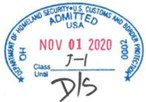
The CBP officer determines the duration you are allowed to stay in the U.S. If you are granted admission in the U.S., the CBP official will scan your passport to create an electronic arrival record (Form I-94). Then, the CBP officer will stamp your passport page with an admission stamp admitting you in J-1 “D/S” status (which stands for ‘Duration of Status’) and refers to your program dates listed on your Form DS-2019.
Be sure you collect all documents before proceeding into the main terminal of the airport to pick up your luggage. Check your passport stamp. If your stamp does not show the J-1 status or a specific date instead of D/S, immediately return to the CBP officer and request your stamp be corrected.
After your U.S. admission is complete, an electronic record of your admission (known as Form I-94 Arrival/Departure Record) is created. You can obtain your I-94 record within 24 hours of your U.S. arrival by going to the following website.
If your I-94 has a specific date on it, you are authorized to be in the U.S. until that date. “D/S” should also be indicated on your I-94, which means that you can legally stay in the U.S. if you maintain your nonimmigrant status in accordance with your sponsored program.
You cannot begin your J-1 program without having your signed Form DS-2019 and your correctly issued Form I-94. If you are unable to download your I-94 card after 72 hours past your U.S. arrival date, please contact CETUSA for further assistance.
You will need to print two copies of your I-94 record. It is a required document for your host school new-hire process and your social security number application. It verifies your legal-visitor status. If you are having difficulties finding your I-94 record, there may be an error that is preventing you from accessing this record. You will need to go to the nearest CBP port of entry or call the nearest CBP deferred inspection office to bring this to their attention. Visit here for locations and hours of operation.
America is one of the most culturally diverse countries, with residents representing nearly every region in the world. Because American culture is diverse in its geography, history, ethnic backgrounds, and traditions, it is hard to summarize what holds true notions of culture and etiquette throughout the entire country. You may find that Americans are very different people than in your country; learning to understand the differences is part of your journey on this program. Some people will be more accepting than others when it comes to customs and traditions that are foreign to them. Many people will be interested to learn about your home country’s traditions, so be prepared to be asked numerous questions about your home country’s language, society, history, religion, and traditions. You will find additional insights on American culture and how to deal with a ‘culture shock’, please view the Exchange Teacher Handbook – Appendix. In addition to the information mentioned above, you will also find resources relating to the following topics in the Exchange Teacher Handbook – Appendix: banking, money transfers, finances, budgeting, safety, transportation, sexual harassment workplace rights, and U.S. laws.
This section of the handbook provides you with essential information on how to access a variety of local resources and services that will shape your daily life and enhance your overall experience in the U.S. Being aware of the following resources before your arrival will help empower you to make informed decisions and swiftly acclimate to your new community and fully explore your opportunities for cultural events and engagement.
Community Specific Information
Understanding your local community is essential for a smooth transition. To prepare for your arrival, consider utilizing the following resources:
- Online Research: start by researching your U.S. city or town online. You can find valuable information on official websites, local news outlets, and community forums. Visit the website of your new city or town. They usually have a section dedicated to community resources, including public services, parks, libraries, and more. You can also search your city on City-data which is a useful resource with city guides and statistical data about most U.S. cities.
- Social Media: join local community groups on platforms like Facebook or Nextdoor to connect with residents, ask questions, and get recommendations.
- Community Centers: many areas have community centers that offer programs, classes, and information about local events and services.
- Local Chambers of Commerce: visit their website or visit their office for information about businesses and services in the area.
- Community Colleges and Universities: if there’s a college or university nearby, their campus may have bulletin boards or online resources with community information, including housing resources which may be useful.
- Local Religious Institutions: often have information about community resources and may even host community events.
- Local Business Directories: online business directories like Yelp or Yellow Pages can help you find local businesses and services.
The easiest way to find information on a local business is to use an online search engine like Google. Simply enter the name of the city or town you’re interested in, followed by a business name. For example, “New York City Chamber of Commerce.” You can also use Google Maps to search for nearby facilities and services, read reviews, and get directions.
Crime and Safety
Your safety is a top priority on your program. Prior to your arrival, you can familiarize yourself with safety measures in your area using the following resources:
- Local Police Department: visit your city’s police department website for information on crime statistics, safety tips, and emergency contact numbers.
- Websites for local crime and safety: websites such as MyLocalCrime, National Neighborhood Watch, Family Watchdog offer area-specific information that can be a valuable resource for information about crime rates, safety measures, and related topics.
- Emergency Alert Systems: sign up for local emergency alert systems or apps that provide notifications about severe weather, natural disasters, and other emergencies in your area. Alert aggregator websites like the AlertSense platform, aggregate emergency alerts from various sources. You can search for your location and sign up to receive alerts.
Follow your local government agencies, police departments, and emergency management offices on social media platforms like X (former Twitter) and Facebook. They often use these channels to disseminate emergency information.
Libraries and Schools
Libraries offer valuable resources and a quiet place to focus. You can learn about how to find and utilize local libraries using the following resources:
- Public Library Website: explore your local public library’s website for information on services, hours, and online resources. Websites like the PublicLibraries provide comprehensive lists of public libraries across the United States.
- School District Websites: research the website of the local school district in your new community to find more comprehensive information about schools. National Center for Education Statistics (NCES) is a reliable source for education data in the United States. They provide a comprehensive directory of school districts through their “School District Search” tool on the NCES website to locate a school district and information about a certain school in your area.
Public Transportation
- Public Transit Authority: find the website of your local public transit authority – name which you can learn about on your city’s website — to access information on routes, schedules, and fares.
- Rideshare Apps: download popular rideshare apps like Uber and Lyft for convenient transportation options.
Hospitals and Medical Facilities
Staying healthy is a priority during your stay in the United States. Accessing healthcare resources, understanding your insurance coverage, and locating nearby medical facilities will be essential for your well-being. Remember, before seeking care, be aware of your health insurance coverage and network providers to ensure that your care will be covered.
- Hospital Directory: The American Hospital Directory provides a comprehensive directory of hospitals across the United States. You can search for hospitals by name, location, or specialty.
- Urgent Care Centers: In addition to hospitals, consider finding nearby urgent care centers. These facilities can provide non-emergency medical services without an appointment. You can often find them through a quick online search or on your healthcare provider website.
Recreation Centers
Find nearby facilities and programs designed to help you stay active, make new friends, and enjoy leisure activities while adjusting to life in the United States.
- Local Parks & Recreation Department: your city or county’s Parks and Recreation Department is a primary resource for finding recreation centers, sports facilities, and programs. Visit their website for more information on nearby facilities and events.
- Recreation Center Website: Many recreation centers have their own websites with details about operating hours, amenities, and membership options. Search online for your nearest recreation center’s website.
Banks
Managing your finances is crucial during your stay. Prepare by utilizing the following resources.
- Major Bank Websites: Research the websites of major banks like Bank of America, Wells Fargo, JPMorgan Chase, and Citibank to explore their services, find branch locations, and learn about account options.
- Online Banking and Mobile Apps: Many banks offer the ability to open accounts and manage your finances online or through mobile apps. You can often start the account setup process before your arrival.
Make sure to review and utilize these resources before your arrival to help you settle in and transition smoothly to life in the United States. Remember that adapting to a new country takes time, so don’t hesitate to seek assistance from CETUSA if you have difficulty navigating your local area.
U.S. Arrival and Tax Requirements
Within 72 hours of your arrival, email or call CETUSA to confirm you’ve arrived safely. When contacting CETUSA you need to provide your U.S. living address including room/apartment number (if applicable), even if it is temporary, and a local phone number if you have one. It is necessary for CETUSA to register your arrival and contact information in SEVIS before you apply for your social security card. After you confirm your arrival with CETUSA, you will be sent a welcome email that contains important information about your J-1 program.
Contact your host school to arrange the schedule for your orientation. If you have any trouble reaching your host school, contact CETUSA immediately.
Applying for your social security card before notifying CETUSA of your arrival may result in processing delays.
Once you report your address to CETUSA, we will validate your SEVIS record and change your status to ’Active’. CETUSA cannot activate your SEVIS record before your start date. You can proceed to apply for your Social Security Number once CETUSA validates your SEVIS record. Once your record is validated, you will receive notification from SEVIS from the following email address (sysadmin.sevis@dhs.gov).
You will need a Social Security Number (SSN). If you have obtained an SSN from a previous U.S. visit, you do not need to reapply and can use your old card. Applying for an SSN can only be done in person at your local Social Security Administration office. To apply for an SSN, you must:
Verify your living address with CETUSA within 72 hours of your arrival. You must wait 7-10 days after you have notified CETUSA of your U.S. living address and after your program has been activated before applying for your social security number.
- Locate a Social Security Administration office near you and decide when and how you will get there.
- Complete Form SS-5: Application for A Social Security
- Bring the completed application and documents listed below to your appointment.
- Form DS-2019
- Passport
- Form I-94 (download here)
- Social Security Letter from CETUSA (included in your acceptance packet)
- After your appointment, you should receive your Social Security Number in the mail within 2-4 weeks. Please note, depending on where you apply for your SSN, this process may take even longer.
- You must report your SSN to your host school as soon as possible.
- If for some reason you withdraw from your program at your host school after receiving wages, but before receiving your SSN, by law you are still required to report your SSN to your host school for tax purposes.
If you have lost or forgotten your SSN card or number, review the information on the Social Security Administration website.
It is important that you take steps to protect your Social Security number from theft. If someone obtains your Social Security number, they can use it to get other personal information about you, including your bank or credit information.
Within the first week of your training – more likely on your first day – you will be asked to complete employment related forms required by law, and which are necessary to set up your payroll. You must bring the following documents with you:
- Passport with J-1 visa
- Form DS-2019
- Form I-94
Your hiring manager or the human resources office staff will ask you to provide your bank account information to set up a direct deposit for your salary payment, which is a convenient way of an automatic and secure money transfer every pay period directly to your account. If you have not opened a bank account yet, you can provide this information later.
You may be asked to provide evidence of applying for the social security number – a receipt given to you after your visit to the Social Security office.
As you prepare to complete your new hire documents, one of the most critical steps is to verify your residency status for tax purposes. Accurately determining your tax residency is essential, as it directly affects your tax obligations and eligibility for certain exemptions.
Although the residency rules for tax purposes are based on immigration laws, it’s important to note that the definition of residency for tax purposes differs significantly from U.S. immigration law. Under tax regulations, there are two categories of “aliens” (i.e., nonimmigrants): resident aliens and nonresident aliens. Resident aliens are taxed in the same way as U.S. citizens, meaning they are responsible for paying taxes on their worldwide income. In contrast, nonresident aliens are generally taxed only on income sourced within the United States or income that is effectively connected with a U.S. trade or business.
As a J-1 Teacher, you are typically classified as a nonresident alien for tax purposes under IRS regulations. This classification usually applies during the first two years of your stay in the U.S. However, if you have been in the U.S. for more than two out of the last six calendar years, your tax residency will be determined by the Substantial Presence Test. For more detailed information, please visit the IRS website section titled Taxation of Alien Individuals by Immigration Status – J-1.
The United States has bilateral income tax treaties with over 65 countries and many treaties provide specific benefits for J-1 aliens of the applicable treaty. Each treaty provision is unique and must be examined to determine the applicable treaty benefits that may apply to your program.
There are provisions under the Internal Revenue Code and applicable income tax treaties that may exempt a J-1 visa nonresident’s compensation for personal services income from U.S. taxation.
If your home country has a treaty with the U.S., to take advantage of the treaty benefits you will need to provide documentation and comply with certain administrative procedures, such as filling out tax forms, providing proof of residency or eligibility, and reporting the income appropriately. Review the Tax Treaty Benefits section in the Exchange Teacher Handbook – Appendix for more details.
In understanding taxes, there are two important concepts you must understand. “Exempt” means that you do not have to pay these taxes. “Non-exempt” means you are obligated to pay these taxes. Note: the information below applies to participants who are classified as nonresident aliens.
- Social Security, Medicare, and federal unemployment tax (exempt): As a non-resident J-1 visa holder, you are exempt from social security, Medicare, and federal unemployment tax. If you see that your host school has deducted these taxes from your paycheck, please kindly inform them of your exemption or notify CETUSA to help resolve the issue. However, once you are classified as a resident alien, these tax deductions will apply.
- Federal income tax (non-exempt): You are not exempt from federal income tax. In the U.S., all income- earning individuals are subject to pay income tax. A percentage of your salary will be withheld, and you may be able to claim some of it back as a refund at the end of the year. The income tax is determined based on your salary amount.
- State and city income taxes (non-exempt): You are not exempt from state and city income taxes. It is possible that your state or city government may impose an income tax. If there is a state and/or city income tax where you reside, your host school will generally withhold these taxes from your paycheck. You may be able to claim some of it back as a refund at the end of the year. If your host school does not withhold these taxes, you must file taxes at the end of the year, and you may have to pay these taxes.
Please consult with a human resources manager at your host school about your tax withholdings. We recommend that you closely review your first and subsequent paychecks to ensure accuracy of the taxes applied.
If you are required to file taxes as a resident alien, your stipend wages become subject to Social Security, Medicare, and federal unemployment taxes.
As an exchange teacher in the U.S., you and your J-2 dependents (if applicable) are required by law to file taxes before the tax filing deadline.
The Affordable Care Act mandates that all individuals who are considered U.S. residents for tax purposes, as defined by the Internal Revenue Service, carry adequate health insurance coverage. In general, J-1 Teachers are considered nonresidents if they have been in the United States for less than 2 years. If you have lived in the United States for more than 2 years, or if you are considered a U.S. resident for tax purposes, you must have additional insurance meeting the specific requirements of the Affordable Care Act. Exchange Visitors who are subject to the ACA mandate but fail to comply will be subject to a fine upon filing a tax return.
Your host school will require you to complete an I-9 Employment Eligibility Verification Form to demonstrate that you are authorized to work in the U.S. It must be completed before you begin your program begins. View the I- 9 Employment Eligibility Verification Form here.
Instructions: Complete Section 1 with your information. Check the box ‘An alien authorized to work until‘ and enter the program end date as indicated on your Form DS-2019.
You will need to provide the following documents to your host school, who will witness you sign the I-9 Form:
- Passport
- Form DS-2019
- Form I-94
- Social Security Card (if on hand, or once the card is mailed to you)
Your host school will also ask you to complete the Form W-4 (Employee’s Withholding Allowance Certificate) to ensure you are taxed appropriately. If you qualify for a nonresident alien status, please follow the instructions below. You can also review special instructions for nonresident aliens issued by the IRS.
It is important to note that J-1 visa holders are typically referred to as ‘nonresident aliens’ under the IRS regulations for tax purposes. If you have been in the U.S. for 2 years or less, you are automatically considered a nonresident for tax purposes. However, if you have been in the U.S. for longer than a 2-year period, the Substantial Presence Test will figure out your residency for tax purposes. Please visit the IRS website expanding taxation for Taxation of Alien Individuals by Immigration Status – J-1 and companies like Sprintax will provide further guidance on this subject.
Below you will find instructions on how to complete the W-4 form:
- Step 1: Complete all boxes. Online (c), check only “single or married filed separately” marital status, regardless of your marital status.
- Step 2: Skip; not applicable to you.
- Step 3: If you are a resident of Canada, Mexico, or South Korea and have a J-2 dependent with you in the U.S. you may be able to claim the child tax or other dependent credit. Follow this link for more information.
- *Skip Step 3 if you are not a resident of those countries and do not have a dependent.
- Step 4: In the blank space under Step 4(c) enter “NRA” (nonresident alien).
- Step 5: Fill out dates, host school’s details, and sign in the relevant spaces; leave the rest of the form.
Other important information about the W-4:
- There is a tax treaty between India and the S. governments. This means if you are an Indian resident, then you may be entitled to some additional tax deductions and credits. Follow this link for more information.
- Here are some helpful links about the W-4:
If you are a resident of Canada, Mexico, or South Korea, you can also claim a personal exemption for your spouse if your spouse had no gross income for U.S. tax purposes and cannot be claimed as the dependent on another U.S. taxpayer’s return. In addition, you can claim exemptions for your dependents who meet certain tests. Residents of Mexico or Canada must use the same rules as U.S. citizens to determine who is a dependent and for which dependents exemptions can be claimed.
By the end of January, you will receive a Form W-2 from your host school outlining your total wages and amount of each tax withheld in the previous year. You should only receive a Form W-2 if you were set up by the host school as a standard employee and withholdings were taken out. Applicable taxes are typically taken out of each paycheck when you receive a salary or wages. The federal income taxes that you may be required to pay at the end of the year may be less (or you may receive some money back).
Program Changes, Compliance and Termination
CETUSA Staff welcomes communication from you by email or phone during your program. Another way CETUSA monitors your J-1 program is through monthly check-ins. CETUSA Staff will follow up with you to address any questions or concerns expressed in your responses.
Monthly Check-Ins: once a month (typically on the 10th) you will receive a monthly check-in survey from CETUSA by email. The survey will ask questions to help you reflect about what you are experiencing in the U.S. It is a program requirement, and you are required to complete your monthly check in within 72 hours of receiving the email. We care about you and your well-being and are eager to know how your program experience is going. Your feedback is important to us.
Cultural Activity Report: Exchange teachers are required to complete and submit an annual cultural activity report as part of the J-1 Teacher Program. This report must detail the cross-cultural activities conducted during each academic year. The report should include the exchange teacher’s full name, the sponsor’s name, and specific information about each cultural activity. For each activity, the report should provide the date, location, audience, participants, a general overview, and the estimated impact. The purpose of this requirement is to ensure that exchange teachers actively contribute to cultural exchange by sharing aspects of their home country’s culture, traditions, and educational practices with their U.S. students and communities. Additionally, these activities should foster dialogue between U.S. students and students in the teacher’s home country, enhancing mutual understanding and global awareness. This annual reporting helps CETUSA and the U.S. Department of State monitor and assess the effectiveness of the cultural exchange components of the program.
Your prompt responses to monthly check-ins are a mandatory requirement.
You are allowed to visit countries outside of the U.S. during your program. Be sure to check with the consulate or embassy of the country you wish to visit for their visa and travel requirements to ensure entry for your visit. You need to have approval for your travel dates from your host school before planning any trips. Your Form DS-2019 travel validation must be signed by CETUSA Staff before departing the U.S to re-enter the U.S. after visiting a different country. After your Form DS-2019 is signed, it is valid for one year from the date signed, or until your Visa expires, whichever comes first. Review the Travel Validation section of the Exchange Teacher Handbook – Appendix for more details. To get your Form DS-2019 signed, you need to submit an online request. Once your request is approved, CETUSA will email you your DS-Form 2019 with the travel validation signature.
It is important to understand the restrictions and limitations of changing your program. Changes must be requested by you and CETUSA Staff must always approve any changes before they can be allowed into your program. If your program was arranged by an agency, they must be involved in the process as well.
The standard duration for the J-1 Teacher Program is one to three years. If your initial program duration is less than three years, you may request an extension to reach the maximum three-year limit. These extensions are intended to help you fulfill the full three-year program if initially assigned a shorter duration.
After completing the maximum three-year period, you may be eligible for further extensions. Such extensions can be granted on a year-by-year basis for a total additional period of up to two years, with the cumulative duration of the program not exceeding five years. CETUSA will submit a detailed request to the Department of State on your behalf, providing evidence that extending your program stay aligns with the original goals of the program and continues to offer substantial educational and cultural benefits. It is important to note that extensions are not granted for reasons unrelated to the program’s original objectives, such as personal preference or convenience. Additionally, approval of an extension does not imply eligibility for any other immigration status beyond the exchange visitor program’s category.
To initiate the application process, you must submit a formal request for an extension to CETUSA well before the end of their current program, allowing sufficient time for processing and approval. The request should be accompanied by supporting documentation, including a letter of support from the host school confirming the need for and benefits of the extension. You are also required to complete any additional forms or requirements specified by CETUSA and the U.S. Department of State. The supporting documentation for the extension request should include a detailed plan outlining the goals and objectives for the extended period, emphasizing any new cross-cultural activities or professional development opportunities.
If the extension is approved, CETUSA will notify you and your host school, providing an updated DS-2019 form with the new program dates. During the extended period, you must maintain valid visa status and comply with all program regulations to ensure a successful continuation of your program.
Extensions are typically considered on a case-by-case basis, with a focus on the participant’s performance, the host school’s support, and the overall benefits of the extension to the participant’s professional development and cross-cultural exchange. It is essential for you to plan and communicate your intentions early to facilitate a smooth and timely extension process.
We strongly discourage changing host schools during your program. It is important to handle yourself in a professional manner if any problems arise at your host school. We advise you to try to resolve conflicts directly with your immediate supervisor, but if the problem reaches beyond your comfort zone or boundaries, CETUSA is always available to be a mediator to help resolve your issues to the best of our ability. Contact your CETUSA Program Monitor if you are unsure of how to handle a problem at your host school.
However, we understand that there are instances when it may be necessary to change host schools. If you feel that you are experiencing abnormal or unsatisfying situations (including, but not limited to dangerous and unsuitable host school conditions; harassment, violent behavior, threats or bullying; incidents involving the criminal justice system; training hours and stipend violations; sexually related incidents or abuse; inappropriate training activities), you should contact your CETUSA Program Monitor immediately to consult with them regarding the best course of action.
Transferring between host schools does incur a fee and requires documentation from you and the host school you are transferring to. If you stop training at your original host school, you have 30 days to secure a new transfer host school. If you are unable to secure a new host school in 30 days, your program will be shortened. Transfers are not guaranteed and are approved on a case-by-case basis.
If you need to return home early, notify your CETUSA Program Monitor. You will be asked for a written explanation about your decision and a copy of your flight information out of the U.S. to end your program in good standing. If your program is shortened by at least 15 days, then you will receive a revised Form DS-2019 that reflects your shortened end date.
Participants are subject to the U.S. Department of State’s Exchange Visitor Program regulations, and to the rules specified by CETUSA.
In cases where a program participant willfully and knowingly violates CETUSA program rules, U.S. government/immigration laws, or the host school’s rules, CETUSA reserves the right to withdraw sponsorship. Program Termination requires a copy of flight information departing the U.S. is provided to CETUSA, and your immediate departure from the U.S.
The following could result in program termination:
- Unauthorized employment.
- Failure to maintain communication with CETUSA.
- Failure to provide CETUSA with an updated living address within 10 days of arrival.
Exchange teachers who have previously participated in the J-1 Teacher Program may be eligible to participate again, provided they meet certain conditions. To be considered for repeat participation, teachers must complete a mandatory two-year residency in their home country following the conclusion of their initial J-1 program. This period is designed to ensure they contribute to their home country’s educational system and apply the skills and knowledge gained during their exchange experience in the U.S. Additionally, repeat applicants must demonstrate continued compliance with all program regulations and eligibility requirements, including current teaching qualifications and proficiency in English. They must also present new cross-cultural activity plans that build upon their previous exchange experiences. CETUSA and the Department of State will review repeat eligibility applications on a case-by-case basis, focusing on the teacher’s prior performance, contributions to their home country, and potential for future cross-cultural exchange and professional development.
As a J-1 Teacher, you must meet certain obligations to maintain your legal immigration status while in the U.S. Maintaining lawful status is necessary to receive all the benefits of your J-1 status in the future, such as applying for a change of status if needed. If you do not maintain lawful nonimmigrant status, it can result in problems with immigration and could lead to deportation from the U.S.
To maintain exchange teacher status, you must:
- Report address and telephone number changes to CETUSA within 10 days.
- Failure to comply with this requirement may result in your program termination.
- Apply for your Social Security Number.
- If you do not have the number issued before this program, you must apply for it.
- File your taxes on time.
- Only work at the host school as indicated in Form DS-2019.
- You must work for at least 32 hours a week. Engaging in employment outside of your approved program is strictly prohibited and grounds for program termination.
- Report changes in your program to CETUSA.
- Obtain travel authorization signature before leaving the U.S.
- You cannot be away from your program activities for longer than 30 consecutive days. Failure to obtain the signature will cause admission problems at the U.S. port of entry.
- Report to CETUSA if Form DS-2019 is lost or stolen.
- Contact CETUSA to obtain a replacement document.
- Contact CETUSA Staff to find out if you are eligible for an extension. No extensions can be granted after the original program end date has lapsed.
- Keep your passport valid at all times.
- You should have a minimum of 6 months of validity for your passport at any given time. You can renew your passport from within the United States in many instances.
- Depart the U.S. within the 30-day grace period.
- You must depart the U.S. after your program end date as indicated on Form DS-2019 to avoid unlawful presence in the U.S. A visa overstay will have a negative impact on your future U.S. visa applications.
- Report early departure to CETUSA.
- If you plan to leave the U.S. before your original program end date, you must report your early departure date and reason to CETUSA.
Council for Educational Travel, USA (CETUSA), as a designated Exchange Visitor Program sponsor, abides by all United States Department of State regulations (22 CFR Part 64) governing the Exchange Visitor Program (later referred to as “Program”) and its provisions. I have read those regulations and if my application is approved, CETUSA will be my legal program sponsor during my Program while I teach at an approved host school in the U.S. I understand that my sponsorship with CETUSA is conditional and may be withdrawn or terminated at CETUSA’s discretion if I fail to follow program rules, terms, and conditions as described below:
- I have researched my host school and am confident that my Program aligns with my educational and professional goals. I believe this program will enhance my current knowledge and skills and help me gain new ones.
- I confirm that I meet the qualifications for teaching at the primary or secondary levels in my home country, including having at least two years of full-time teaching experience. I possess a degree equivalent to a U.S. bachelor’s degree in education or the academic subject field I intend to teach. Additionally, I meet the teaching eligibility standards of the U.S. state where I will be teaching, including any required background checks.
- The submission of this application does not constitute CETUSA sponsorship approval. CETUSA will notify me after submission of the completed application, supporting documents, interview, and full payment of fees, of its sponsorship decision. I acknowledge that CETUSA’s sponsorship does not guarantee my J-1 visa approval. CETUSA may issue a Form DS-2019 if my application meets all relevant program requirements, but the decision regarding my entry visa, which CETUSA has no control over, is determined solely by the U.S. Embassy or Consulate after my visa interview. If my visa is denied, I will be unable to participate in the program.
- I agree to maintain a valid passport for the duration of my Program. If my passport is lost or stolen, I will notify CETUSA immediately and will apply for a replacement document with my home country’s Embassy or Consulate in the U.S.
- I agree to request a replacement copy of my Form DS-2019 from CETUSA in the event that my original form is lost, stolen, or damaged. I understand and acknowledge that I shall not reprint the electronically transmitted original copy for any purpose.
- I agree I have been provided with accurate program information and have been advised of all program-related fees. Any questions regarding the program fees, cancellation and the refund policy were asked and fully answered before I was asked to pay any non-refundable fees.
- I agree to pay the local visa fee to the U.S. Embassy and any additional fees that might apply at the U.S. Embassy or Consulate in the country where I am applying for the visa, as well as the government SEVIS fee required for payment prior to my visa interview date.
- I am responsible for fees associated with any additional CETUSA services as stated in the Fee Disclosure.
- There shall be no refund of fees if I cancel my Program for any reason after arrival in the U.S., if my Program is shortened for any reason, or if my sponsorship is withdrawn or terminated.
- Pursuant to Department of State regulations, my participation in the Program under J-1 Teacher category is limited to a maximum duration of three years. Any request for an extension beyond this period must comply with all relevant regulations and is subject to approval by CETUSA and the Department of State.
- The CETUSA application review process will require one or more video conference call(s) to verify my English language skills, knowledge of my host school, my teaching assignment, and other details specific to my Program. If I fail to pass this interview and demonstrate my preparedness for the program, CETUSA will cancel my application and apply a cancellation fee. CETUSA reserves the right to refuse its sponsorship and will only grant sponsorship if all program eligibility and other sponsorship criteria are met.
- I will be able to sustain myself financially for the duration of my Program, including the initial $2,000 start-up funds, and $2,000 per month (including salary) while on the program. Any salary received may not be sufficient to cover all my expenses during the program, as such expenses depend on my personal spending habits as well as the geographic area where I am placed. I confirm I have access to additional funds to cover such needs if necessary.
- I understand that my exchange teacher salary is meant to help me cover my cost of living while on my Program. Any J-2 dependent (if accompanying me) will require an additional $1,000 start-up funds and $1,000 per month extra funding, for which I will be responsible.
- I have been advised to estimate the amount of funds to be received as a stipend, scholarship, personal savings, and/or family support, and to create a budget for monthly and annual living expenses while in the U.S. I conducted research and had the opportunity to ask CETUSA staff about my estimated living expenses for the location where my Program will take place.
- CETUSA is not responsible for the expenses incurred by me if I have not started my Program activities by the agreed date due to delays caused by my host school, or for any other reason not under the direct control of CETUSA.
- I am responsible for all international and domestic travel, and living expenses associated with mine and my J-2 Dependent(s) program (if applicable), including any medical expenses that are not covered by sickness and accident insurance provided by CETUSA.
- CETUSA does not provide or arrange housing. If I arrange housing independently or through my host school where and if possible, I am aware I will be required to sign a lease and pay a deposit, which usually amounts to the first and last month’s rent and may include an additional security deposit. I will contact CETUSA if I have questions related to my housing and other program-related documents requiring signatures.
- Safety must take priority over financial considerations such as paying extra for transportation or housing expenses (for example, paying for taxis/rideshare services if I feel unsafe instead of using public transportation or if the least expensive housing is in an unsafe neighborhood, I will rent more expensive housing in a safer area).
- If I seek assistance from CETUSA with locating housing, any leads provided by CETUSA are merely suggestions, not endorsements. It is my responsibility to secure housing, and (1) fully read and understand any rental agreement before signing, (2) not exchange money between myself and the landlord prior to signing the rental agreement, and (3) document all rental/deposit payments. I will follow all tenant rules and accept all costs related to my rental agreement and housing expenses.
- CETUSA will enroll me in a mandatory accident and sickness insurance policy with a third-party medical insurance provider. I understand that CETUSA is not my insurance provider, and that this insurance meets and exceeds the U.S. Department of State’s insurance requirements for J-1 visa holders. Further, I have read all the insurance information provided to me and will create an insurance account as instructed.
- I will abide by the rules of the 30-day grace period before and at the end of my Program, unless otherwise indicated on my I-94, as determined by the U.S. Customs and Border Protection officer at the time of my arrival. The purpose of my 30-day grace period before my Program start date is to acclimate to my new surroundings and/or secure living accommodations or if post-program, to settle my affairs and prepare to return to my home country. I understand I am not authorized to pursue my Program activities during my grace periods. While I may travel in the U.S. during each grace period, I understand it is not recommended that I travel outside of the U.S. as I may not be permitted re-entry on my J-1 visa. If my Program sponsorship is withdrawn or terminated due to a program violation, I understand that a grace period does not apply, and I will be required to depart the U.S. immediately. Overstaying my visa or violating the terms of my visa can result in notification to the Department of State and the United States Citizenship and Immigration services, federal fines, and disbarment from future re-entry to the U.S.
- The dates of my accident and sickness insurance coverage will match the program dates indicated on my Form DS-2019. If my Program dates are adjusted, my grace period dates, and my insurance coverage dates will adjust accordingly (e.g., if I am dismissed or withdraw from the program early, I will no longer have insurance coverage). I understand that my insurance coverage does not extend into grace period(s) unless I purchase it separately.
- Without my approval, CETUSA is restricted in its access to certain medical information or records if I have an accident or illness during my Program. This is a result of the U.S. Government’s Health Insurance Portability and Accountability Act (HIPAA). If I require CETUSA’s help, and for CETUSA to fully assist me with insurance-related issues, I will be granting CETUSA a written authorization to access my medical records.
- My accident and sickness insurance does not include coverage for pre-existing conditions, which are defined as an injury, sickness, disease, or other condition of which I had symptoms or for which I was seen by a doctor within the six-month period before my coverage start date. I understand that additional coverage may be necessary if I have a pre-existing condition.
- If I become pregnant while on the Program, I am required to notify CETUSA immediately. Once notified, CETUSA will assess my situation based on the specific circumstances of my pregnancy. This evaluation will take into account various factors, including access to paid maternity leave and the assurance of a position upon my return, the availability of prenatal or pregnancy care through either the school’s insurance or other insurance, my financial ability to cover the costs associated with pregnancy, childbirth, time off work, and the additional expenses of a new child, as well as my plan for childcare upon returning from maternity leave. Depending on the outcome of this assessment, CETUSA may determine that it is in my best interest to return to my home country, where I can receive the necessary support and care. I agree to comply with any decision made by CETUSA regarding the continuation or shortening of my Program.
- I will wait to receive my passport and to verify the accuracy of my J-1 visa stamp information before booking my flight to the U.S. CETUSA is not responsible for the costs of rebooking or cancelling a flight due to delays in visa processing, visa rejection, or other unforeseen changes that may affect my travel plans.
- Prior to my program begin date, I will read all CETUSA program materials provided to me and complete the required CETUSA Pre-Departure Orientation and quiz before my arrival in the U.S.
- I will notify CETUSA that I have arrived in the U.S, provide a temporary or permanent living address, and a phone number where I may be reached. I will check in with CETUSA no later than 72 hours after arrival in the U.S., either by phone or email. If I fail to notify CETUSA of my arrival and U.S. living address within 30 days of my program start date, my Program may be automatically cancelled.
- I will apply for and obtain a social security number (SSN) within 7-10 days after arrival in the U.S. I must first notify CETUSA of my U.S. living address and wait until after my Program has been validated in SEVIS by CETUSA before applying for my SSN to avoid processing delays. If I already have a social security card, I understand that I do not need to re-apply for a new number, and I will bring the card with me.
- I will inform CETUSA within 10 days of any change in my living address or my contact information in accordance with U.S. law and Department of State regulations.
- I will participate in authorized teaching only at the host school indicated as the site of activity on my Form DS-2019. I will not transfer from, leave, or intend to leave the host school for any reason without seeking prior written acknowledgment from CETUSA. Transferring and beginning to teach at another school without CETUSA’s approval may be grounds for my immediate termination from the Program and expulsion from the U.S. at my own expense without reimbursement of any fees.
- I understand that I am not permitted to teach at the pre-kindergarten level unless it is part of a language immersion program offered as a standard course of study by an accredited primary school.
- I agree to teach full-time, committing to a minimum of 32 hours per week at my assigned host school. I understand that my teaching responsibilities will be commensurate with those of similarly situated U.S. teachers, ensuring a meaningful and equitable professional experience.
- I agree to actively participate in cross-cultural activities designed to share my home country’s culture with U.S. students and the community. This includes completing at least one, mandatory cross-cultural activity for my classroom, host school, or community, and one activity involving U.S. student dialogue with schools or students in another country.
- I agree to comply with all requirements and regulations of the Program, including providing annual reports detailing my cross-cultural activities.
- I acknowledge that my program dates will coincide with the U.S. academic year cycle unless otherwise approved by the program sponsor, ensuring a smooth transition and alignment with the academic calendar.
- I agree to comply with any applicable collective bargaining agreement.
- I will participate in my teaching assignment only during the dates specified on my Form DS-2019. If I am unable to teach during the dates specified on my Form DS-2019, I will notify CETUSA.
- I understand that if I pursue or apply for a change in visa status during my Program, my Program will be immediately shortened. I will no longer be able to continue participating in my J-1 program and I will depart the U.S.
- CETUSA is required to update my SEVIS record with changes to my Program, including but not limited to, adjustment to my program dates (for any reason), change in the host school name, host school address, substantial change in my stipend, or my program funding. I will notify CETUSA immediately of these changes to my Program.
- CETUSA is not responsible for and cannot control decisions made by the host school. My host school can end my Program at any time, without prior notification, with or without cause. If for any reason including, but not limited to, getting fired, an injury, insufficient English Language capability, disciplinary reasons, my Program ends prior to the end date listed on the DS-2019 form, I will promptly inform CETUSA as soon as this is known. Depending on the situation and at its discretion, CETUSA may end my Program early or allow me to search for a transfer to another host school.
- I will be responsible for locating a new host school if, for any reason, my Program at my original host school ends earlier than the end date on my Form DS-2019, or my host school becomes unfit to host my Program, and I wish to continue my Program elsewhere. There is no guarantee of approval from CETUSA for an alternative Program elsewhere. I acknowledge I have 30 days from my last day of teaching to find a new host school or shorten my Program and depart the U.S. within the timeframe provided by CETUSA.
- I will not accept unauthorized employment, of any kind, outside of my Program. i.e., “a second job,” including but not limited to, private tutoring, self-employment, and cash-based earnings. I understand that my acceptance of such a job while on my Program will constitute illegal employment and is subject to my Program termination and an immediate departure from the U.S.
- I will behave in a professional and respectful manner towards the host school’s staff throughout the duration of the program and demonstrate open-mindedness, flexibility, and a willingness to adapt. I will always call and notify my host school in advance if I am ill or have an emergency and cannot be present at the host school as scheduled. I acknowledge that my recurring tardiness, or unscheduled absences will result in the premature ending of my Program. Any vacation or time off requests must be approved by my host school. I will make any such requests with advance notice and in accordance with my host school’s policy and abide by the teaching schedule provided for me. If I am terminated by my host school for non-compliance with host school workplace rules or policies, CETUSA may withdraw its sponsorship or terminate my Program.
- I acknowledge that I must request a travel validation signature on my Form DS-2019 from CETUSA prior to taking any international trips with an intent to return to resume my Program. I am required to print the sign form and have it with me for travel. The signature is valid for 1 year for future travel from the date of signing. If I fail to obtain the signature prior to my international travel, I may not be admitted in the U.S. to finish my Program.
- I will immediately report abnormal or unsatisfactory situations to CETUSA by phone or email. Some examples of abnormal or unsatisfactory situations include, but are not limited to, incidents involving the criminal justice system; sexually related incidents or abuse; incidents involving Child Protective Services; serious medical issues or health concerns; serious behavioral problems, unsuitable working conditions, employment/contract issues.
- I will contact CETUSA with any concerns or issues I may have in relation to my Program or my host school placement. If my duties significantly differ from the terms set forth in my offer letter or if the environment, for whatever reason, proves unsupportive, I will provide CETUSA with accurate information about my concerns and issues. If warranted and at its discretion, CETUSA will endeavor to assist me in finding another teaching position. However, CETUSA makes no guarantee or representation that it will be able to find me a suitable program transfer.
- I will submit monthly check-in surveys by the required date. I will maintain a functioning email address and phone number and respond in a timely manner to all communications from CETUSA throughout my Program.
- I am responsible for my acts along with any resulting loss, damage or injury caused by me while on the Program. I indemnify and hold harmless CETUSA for damages or loss to any party caused by my conduct. I hereby release CETUSA, its officers, Board of Directors, employees, and agents from all current and future claims, charges, costs, and/or causes of action for loss of property, personal injury, illness, accident, or death sustained for the duration of my Program, whether covered by insurance or not.
- As a J-1 visa holder in the U.S., I am required by law to file taxes before the tax filing deadline. CETUSA cannot assist me in filing my taxes.
- CETUSA has my permission to access my I-94 record which is located at: https://i94.cbp.dhs.gov.
- I acknowledge that my appointment as a teacher in the United States is temporary and does not lead to tenure. I agree to return to my home country upon completion of my Program, ensuring that my participation aligns with the objectives of fostering mutual understanding and professional development.
- I may be subject to the Department of State’s Two-Year Home-Country Physical Presence Requirement 212(e) as determined at the time of my visa interview. I have been advised that CETUSA does not assist in the 212(e)-waiver process should I choose to pursue it, nor will CETUSA provide me with a no objection statement during my Program.
- I will follow all host school and CETUSA rules as well as all federal and state laws. I am solely responsible in the event that laws, regulations, or customs are violated, regardless of my actual knowledge of these laws, regulations, or customs. Failure to follow these rules and laws will be grounds for termination of my Program and will require my immediate return to my home country.
- All travel before, during, and after the program is at my own risk. If I choose to operate motorized vehicle, I will do so at my own risk. I will be responsible for obtaining the necessary license, permits, and applicable insurance required by law to operate a motorized vehicle. I understand that my Program’s sickness and accident insurance does not provide coverage for this purpose.
- CETUSA, its employees, directors, officers, and shareholders, (collectively, “CETUSA”) does not own or operate any entity which provides goods or services for the Program, including but not limited to arrangements for or ownership or control over houses, apartments, or other lodging facilities; airline, vessel, bus, or other transportation companies; food service; or entertainment providers. All such persons and entities are independent contractors and enter into legal relationships directly with me (and not through CETUSA). As a result, CETUSA is not liable for any act or failure to act of any such person or entity, or of any third party. Without limitation, CETUSA is not responsible for any injury, loss, or damage to person or property, death, delay, or inconvenience in connection with the provision of any goods or services occasioned by or resulting from, but not limited to, acts of God, force majeure, acts of war or civil unrest, insurrection or revolt, strikes or other labor activities, criminal or terrorist activities of any kind or the threat thereof, overbooking or downgrading of accommodations, structural or other defective conditions in houses, apartments, or other lodging facilities (or in any heating, plumbing, electrical, or structural problem therein), mechanical or other failure of airplanes or other means of transportation or for any failure of any transportation mechanism to arrive or depart timely, dangers associated with or bites from domestic or wild animals, pests or insects, sanitation problems, food poisoning, disease, epidemics or the threat thereof, lack of, access to or quality of medical care, difficulty in evacuation in case of medical or other emergency, or for any other cause beyond the direct control of CETUSA. In addition, I agree to release CETUSA from its own negligence. I assume responsibility for any civil or criminal liability or for defense costs associated with my defense against any legal claims brought against me, including but not limited to, any and all attorneys’ fees and costs associated with such defense.
- I will not engage in any activity (including, but not limited to abusive use of alcohol or buying, selling, or using illegal drugs) that could bring CETUSA’s program or the U.S. Department of State into notoriety or disrepute. If I engage in such activity, my Program may end prematurely, and I will be required to return home immediately.
- I understand that I am required to comply with my host school’s drug testing policy. I also acknowledge that if the drug test results are positive, my teaching position may be terminated. Should my teaching position be terminated due to a positive test result, my Program will be shortened, and I will be required to return to my home country within two weeks at my own expense.
- CETUSA may release any information provided in this application for the successful administration of my Program. Release of information may be in the form of photocopy, electronic transfer, and/or verbal communication. I grant CETUSA permission to use photographs, videos, quotes, and testimonials related to my Program experience for promotion or publicity of CETUSA programs without compensation to me.
- I am responsible for considering my personal health and safety needs when applying for and participating in the program. If I suffer from any health or other condition that would create a risk to me or to others while abroad, I should not apply. CETUSA reserves the right to dismiss me from the Program, if in its best discretion, it deems me to be a danger to myself or to others, or if my behavior, attitude, health, mental condition, or physical infirmity negatively affects my performance in the Program or if my conduct is disruptive to others or incompatible with the best interests of the host school and/or CETUSA. This decision will be based on the discretion of CETUSA. In the event of such a dismissal, CETUSA shall not be held responsible for any resulting expenses incurred by me such as airfare and shall not be required to return any fees paid by me.
- Any dispute concerning, relating, or referring to the exchange teacher program application, any other literature concerning the Program, or the Program itself shall be resolved exclusively by binding arbitration in Grand Rapids, Michigan according to the then existing Comprehensive Rules of JAMS. Such proceedings will be governed by substantive Michigan Law. The arbitrator and not any federal, state, or local court or agency shall have exclusive authority to resolve any dispute relating to the interpretation, applicability, enforceability, conscionability, or formation of this contract, including but not limited to any claim that all or any part of this contract is void or voidable. Both you and CETUSA are waiving the right to a jury trial. Any action I bring must be solely on my own behalf. I cannot be a part of a class or joint litigation or arbitration.
- By signing this application, I confirm that the information provided in my application (including, but not limited to, health and medical information, academic/resume/skills records, rules, and signed agreements) and all supporting application documents are true, complete, and accurate. I understand that providing false, incomplete, or misleading information on any application to obtain CETUSA sponsorship and/or a U.S. visa may result in application denial or termination of J-1 visa sponsorship of my program, which may be reported to appropriate government authorities.
- I acknowledge that I have received the J-1 Exchange Teacher Program Handbook from CETUSA. I also acknowledge that I have had the opportunity to read, understand, and ask CETUSA Staff questions prior to signing the Exchange Teacher Program Handbook. I further acknowledge and understand that I am obligated to know and comply with all applicable obligations, rules and conditions contained within this Exchange Teacher Program Handbook.